Patrick Zasada: An Athlete Portrait & Why He No Longer Trusts Any Bikepacking Packing List
There are people who say a sentence, look at you briefly, and you need a moment to realize what was hidden in it. Patrick Zasada is exactly that kind of person.
He seems rather reserved. If you ask him who he is, he essentially says: I like to ride my bike and I make my living from YouTube. That's one of those sentences that sound harmless until you talk to people who know him. Eventually, the word "crazy" comes into play with them. Not dismissively, but more like a "beware, it's about to get wild."

This hint doesn't come from nowhere. With Patrick, sometimes a single detail is enough to understand why his normal isn't your normal. Through a casual remark in conversation, you suddenly realize: some of his shortcuts don't lead along cycle paths, but over terrain that sounds more like high mountains than a gravel ride. For Patrick, this has become normal at some point. Precisely this shift in perspective is one of the most exciting topics in his development. Optimize regularly introduces athletes. This format is particularly suitable for Patrick, because he doesn't just ride, but translates his experiences into systems. Into tools, into setups, into decisions. In the end, many people turn to him for help with bikepacking for precisely this reason.
Patrick openly talks about how much his body and mind have changed in recent years. Not too long ago, 50 km meant muscle soreness and the feeling that you simply didn't belong to the "tough" people. Today, that sounds almost like a memory from another life to him.

The engine for this is a mix of curiosity, freedom, and adventure. But above all, the desire to explore one's own limits and find out what is possible if the will is strong enough. This development is visibly documented on his YouTube channel.
Why I trust him when it comes to bikepacking gear
Would I believe this person if they told me what really matters on a long tour? With Patrick, the answer is clear. He has real outdoor and ultracycling experience, and at the same time, he has an eye for efficiency, weight, and practical setup.
He didn't start as an exceptional talent. "Just 6 years ago, I was overweight," he says. But he always asked himself what happens if you keep at it and constantly push your own limits.
Since then, he has covered over 100,000 km on a gravel bike, ridden from home to Portugal, then to the North Cape, and finally finished Badlands. Last year, he even jogged from Frankfurt to Morocco, where he eventually got involved with a drug cartel – a long story… BILD also reported on it. Whether you love such stories or shake your head is almost irrelevant. They show that someone here isn't just talking about adventures, but truly living them.
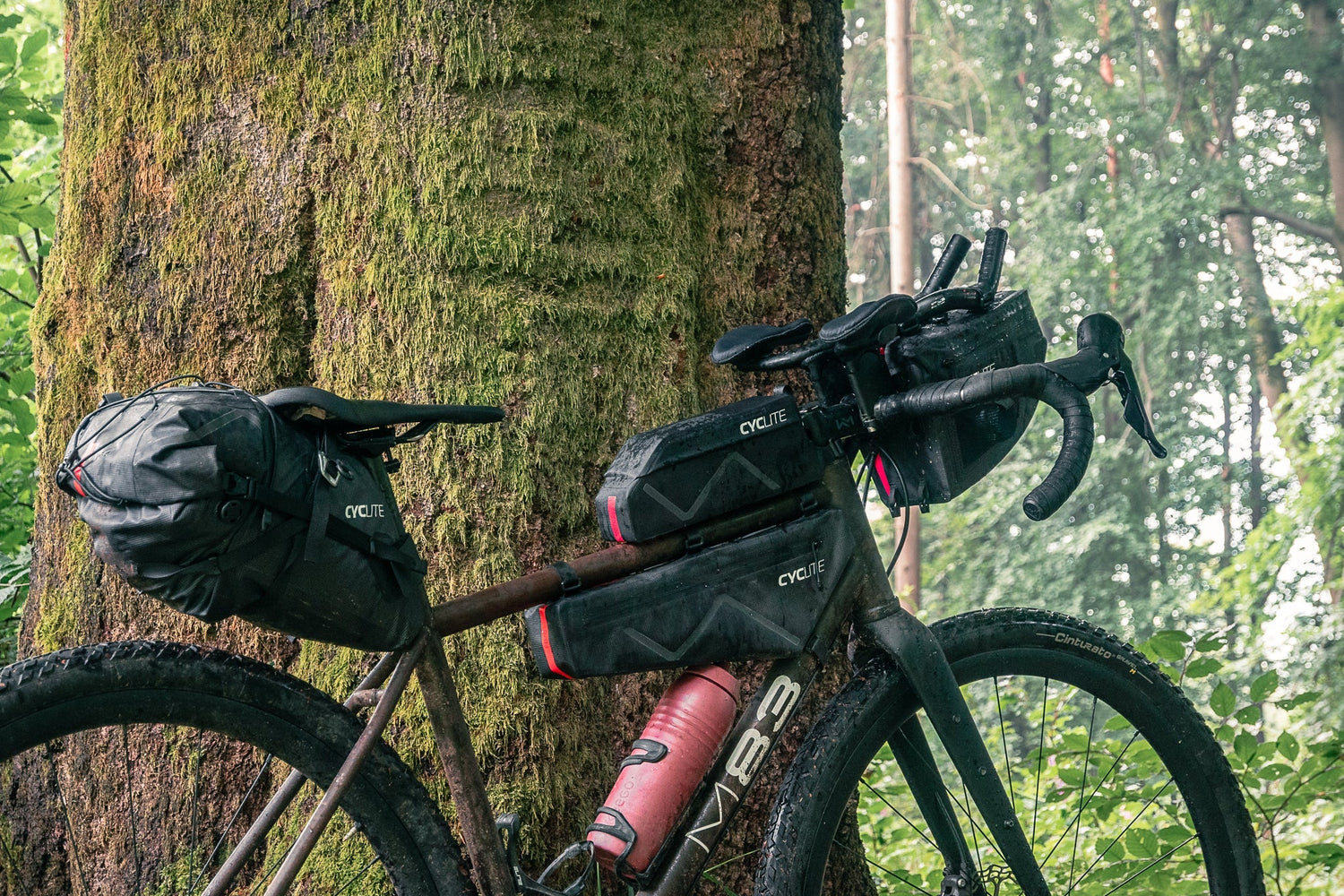
This experience is also the background for his demands on equipment. Everything has to work out there when you're "unsupported." Excuses don't count! You learn that setup is not a minor issue. You learn that bikepacking equipment doesn't mean taking as much as possible, but rather taking the right things. And you learn that a good bikepacking packing list is a tool that frees your mind.
“Most people could immediately save 4 kg without spending a cent.”
That's a statement that almost sounds self-evident in his world. He sees the most common mistakes in bikepacking gear not in the wrong high-end choice, but in small things that add up. When he talks about his setup, it sounds like a clear principle: "It must not fail due to the equipment." He tinkers for a long time, optimizes down to the last gram, and looks for solutions that really pay off out there.
Most bikepacking beginners look for a checklist or similar because they are afraid of forgetting something. This concern often leads to the exact opposite. You pack more instead of better. You pack for every scenario instead of for reality. Ultimately, the planned bikepacking adventure turns into a struggle against every meter of elevation.
Patrick has a very pragmatic view on this. He doesn't recommend expensive bikepacking gear. Rather, he says you should look at what you pack out of habit, even though you don't really need it on tour. That's the core of his philosophy. Don't buy more, but make better decisions.
A classic example is the wallet. Okay for everyday use. Often meaningless weight for bikepacking. EC card, ID, some cash, maybe an emergency card, all in a small zip bag and you're done. No heavy leather and no unnecessary ballast. Sounds trivial, but it's effective.
And it continues exactly like this with oversized wash bags, duplicate spare parts, or something for all eventualities, which ultimately only makes you feel slower and more sluggish.
A bikepacking packing list is good if it unburdens you. If you don't have to ponder every evening. If you don't rummage through your bike bags because everything is somewhere. And if at the end of the day you still feel like continuing the next morning.
Why Patrick no longer trusts any bikepacking packing list?
Because standard lists pretend that all tours are the same. But they are not.
A bikepacking packing list for 3 days is not the same as a packing list for 14 days, where weather and supplies suddenly become real variables. A bikepacking packing list without a tent is different from a setup with a sleeping system. A bikepacking packing list for summer has different priorities than a packing list for spring. And as soon as the Alps come into play, the topic becomes very specific: temperature, wind, rain, altitude. Suddenly, what looks good on the data sheet doesn't count, but what works! For example, a carbon pump initially sounds like an ultralight upgrade – but the parts don't last long. Many people look for PDF packing lists for bikepacking to check off. The problem is, a PDF is rigid... Your scenario isn't.

Patrick drew a conclusion from this and built a system that adapts. This turns a bikepacking packing list into a tool that makes you faster, more relaxed, and often even more comfortable.
Create a bikepacking packing list that fits your tour
His packing list generator is the answer to a real problem. Patrick uses it himself because his tours are so diverse that it makes no sense to save a hundred lists somewhere in his notes and hope each time that one of them fits.
The generator provides structure. You get an individual bikepacking packing list instead of a generic PDF. You can use it to create bikepacking packing lists that match your duration, your style, and your conditions.
You can find the packing list here: Bikepacking Packing List
You will notice that it not only makes you pack faster, but also clearer. You can be sure not to forget anything important.
Why this improves your bikepacking bag setup
Once your packing list is well-structured and optimized, your bikepacking setup automatically improves because you no longer pack chaotically and also optimize weight. Suddenly, the bike feels more stable because you're not just throwing a little bit of everything in everywhere out of uncertainty.
Ultralight, but not dogmatic
Patrick is clearly the ultralight type. He likes to optimize, he tinkers with details, he looks for those "marginal gains" because they add up out there. He doesn't pack ultralight to be ultralight. He packs appropriately.
He talks about tours where he traveled extremely light, even in cold mountain temperatures and rain. In Slovenia, he spent 8 days with only 1.4 kg of luggage. But he also describes situations where he consciously opts for more robust gear because otherwise, it would cost him dearly later. This flexibility is exactly what makes a good gravel bikepacking packing list. Not maximal, but sensible. Not standardized, but adapted. Sounds trivial, but it is precisely the gap that many standard lists don't close.
From desert dust to code – How experience becomes system
If you only see Patrick as an adventurer, you're missing an important half. He builds systems. He tests. He translates experience into tools so that others can make good decisions faster.

One example that perfectly illustrates his thinking: With a partner, he tested over 400 tire models and built a system that doesn't simply look for "the fastest tire" for a route, but rather the best compromise of several real factors. Sorting individual parameters is not the best option in practice. Because low rolling resistance doesn't help you if you have no grip on loose ground and therefore have to ride slower. And a theoretically fast tire is also useless if you're constantly patching. An overview of his tools can be found here: https://www.zasada.cc/tools
What you should take for your next tour
Patrick is the kind of person who, with an almost too sober tone, does things that sound extreme to others. This mixture is exactly why his content works. Because it is both inspiring and practical.
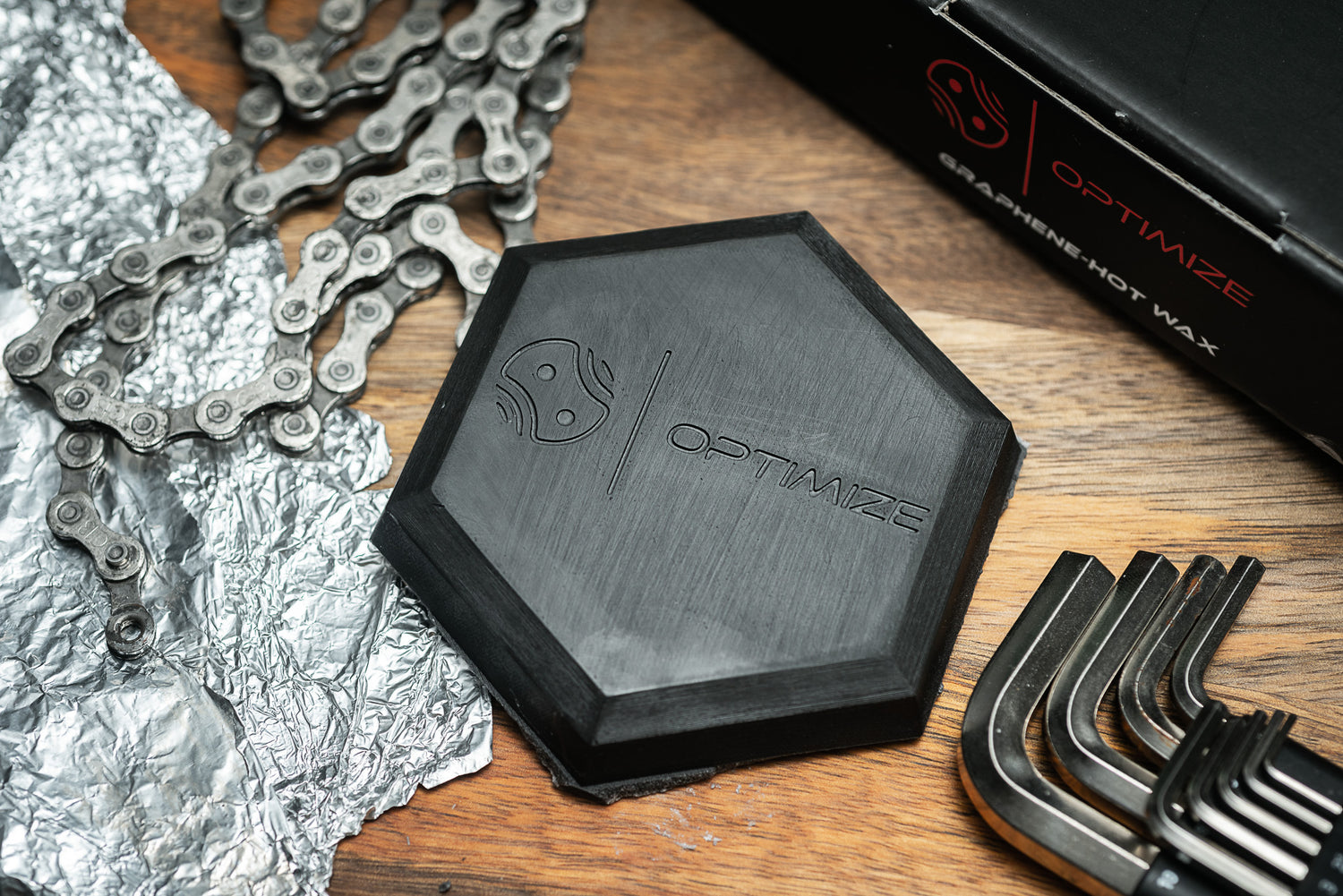
When Optimize was still in its infancy, Patrick was already using our chain wax. For him, wax is the logical choice for long, unsupported tours in remote regions. A clean, quiet drivetrain means less friction, less dirt, and longer durability on the road. This demand for efficiency connects us. Today, we officially support him as a sponsor. Optimize stands for systems that work out there. Patrick stands for adventures where exactly that counts.
You can find the packing list generator here:
https://www.zasada.cc/packlisten-generator
More from Patrick Zasada
On zasada.cc, you'll find a whole collection of tools for gravel and bikepacking.